
Custom Software Systems for Businesses
We build custom software systems for companies that want to digitize processes, automate operations, and connect data, teams, and applications into a streamlined workflow.


What is a custom software system?
A custom software system is a solution developed specifically for a company’s processes, roles, and data, built around those processes.
Typically, such a system connects multiple components that communicate with one another: web applications, mobile applications, APIs, existing systems, and, where appropriate, AI agents.
When do you need a custom software system?
You need a custom software system when your company’s processes are no longer adequately supported by existing tools:
- $important information is scattered;
- $The team manually repeats the same steps every day;
- $data is entered multiple times in different places;
- $Approvals, statuses, or responsibilities are difficult to track;
- $Existing solutions require you to change the process too much;
- $Management does not have a clear understanding of the processes;

How can a custom software system help you?
A custom software system doesn’t start with screens or isolated features, but with the way your company operates: processes, roles, data, approvals, exceptions, and operational goals.

Digitize existing processes
Transform documents, manual processes, and scattered information into clear, easy-to-follow, and easy-to-use digital workflows.

Automate manual steps
It handles repetitive, time-consuming tasks: data entry, notifications, verifications, document generation, and status updates.

Connect data and applications
Connect data from forms, CRMs, ERPs, files, internal applications, or other tools your company already uses.

Standardize processes
Turn informal steps into clear workflows with rules, responsibilities, statuses, and validation criteria.

Provides operational visibility
Displays statuses, bottlenecks, responsibilities, and key metrics in one centralized, easy-to-track location.

Lay the groundwork for digital transformation
The system can evolve alongside the business through new modules, integrations, automations, or AI capabilities that transform the way the company creates value.
Do you have a process that could be more efficient?
Tell us how the process works right now, what tools you use, and where the bottlenecks occur. We’ll help you figure out what system would make sense.
Examples of Custom Software Systems
A custom software system can be built for business, operational, or internal processes. The key is to start with a real-world workflow: who is involved, what information is exchanged, what decisions need to be made, and what outcome needs to be achieved.
How do we build your system?
We build custom software systems using a clear process, in which we first understand how the business works, then design the solution and develop it incrementally, based on defined specifications, objectives, and delivery milestones.
Clarification & Scenarios
We understand what needs to be built, which processes need to be digitized, and who will use the system. We define the main scenarios, users, workflows, and exactly how the solution will be used.
Design & Planning
We create the functional prototype, establish the performance KPIs, and design the system architecture along with the delivery timeline.
Development & Delivery
We develop the system according to the agreed-upon specifications, architecture, and timeline. We test the features, make adjustments where necessary, and prepare the solution for actual use.

What are the benefits of having a system built specifically for your process?
A custom software system doesn’t force you to fit your processes into a generic solution. It starts with how your company actually works and creates a digital foundation that can support your operations, teams, and long-term growth.
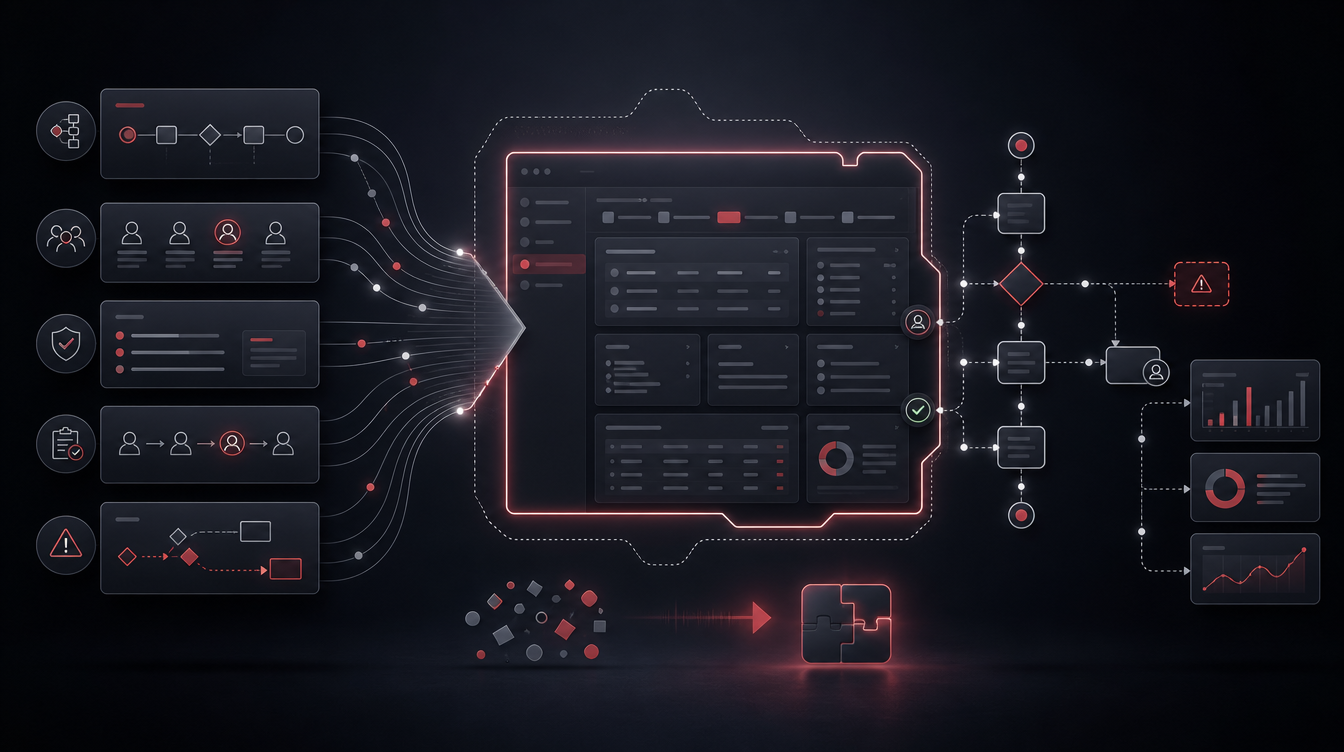
Built around the actual process
The system is designed around your company’s workflows, roles, rules, and exceptions, so your team can work naturally, without unnecessary compromises.
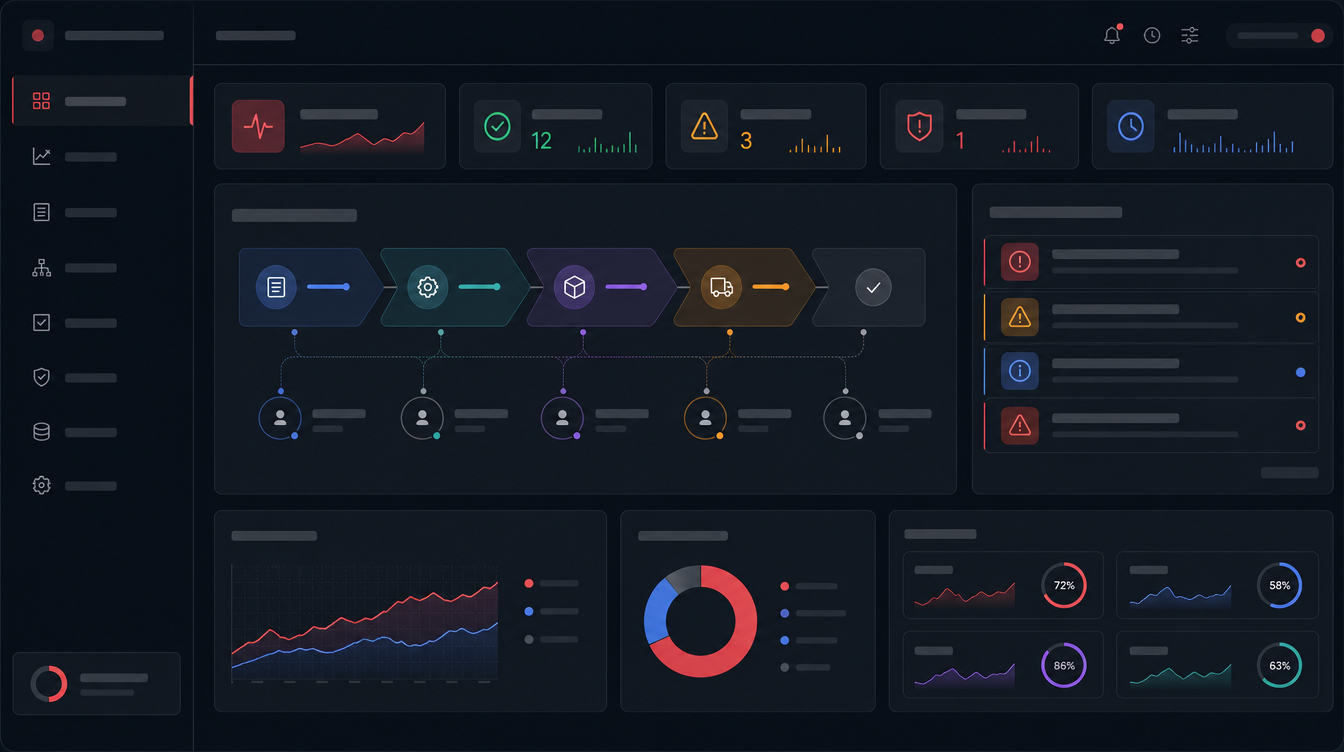
More operational control
You have visibility into statuses, responsibilities, bottlenecks, and key metrics, so you can make clearer decisions and coordinate work more easily.

It evolves along with the business
You can start with a specific process and gradually expand the system—through modules, integrations, automations, or AI capabilities—as your company grows.
Customized Systems for Real Companies
We have built custom software systems for companies that needed to digitize processes, automate operations, and create greater visibility into how their teams work.
Why Build Your Software System with Us?
Because we bring clarity and predictability to software development—combining structured execution with a validated process to deliver solutions that work, scale, and generate real business impact.

Fixed price per stage
You know from the start how much each phase of the project will cost, with no vague estimates or hidden costs.

Fixed delivery time
Each step has a clear timeline, so you know when you’ll receive the results and what comes next.

Payment at the end of each stage
You pay after the milestone is delivered and approved, while retaining control over the decision to proceed.

Efficiency guarantee
Each system is built with a focus on operational results, not just on features or technical deliverables.

Transparency guarantee
You understand every step of the process: what we’re building, why we’re building it, what decisions need to be made, and what deliverables you’ll receive.

Usability guarantee
The system is designed for real-world use, so that teams can easily incorporate it into their day-to-day work.
What Our Customers Say About Us
From streamlined operations to scalable products, our clients share how our software solutions have helped them achieve real, measurable business results.


Konrad Kaschek – Plant Manager @ Bosch

Octavian Cosma – CEO @ Fanaxn
Frequently Asked Questions
What is a custom software system?
A custom software system is a solution built for a company’s specific processes and rules. Unlike a standard application, it can integrate multiple applications, data sets, and roles into a workflow tailored to the company’s actual operations.
When does it make sense to build a custom software system?
It makes sense when a company’s processes can no longer be efficiently supported by Excel, email, WhatsApp, or separate applications. Typically, the need for a custom system arises when manual work increases, data becomes difficult to track, or existing solutions require too many compromises.
How does software help automate processes?
A software system can handle repetitive tasks such as data entry, notifications, validations, document generation, status updates, and request routing. As a result, the team spends less time manually coordinating the process and more time on value-added activities.
How does a software system help a company go digital?
Digitization means transforming existing processes into digital workflows that are easier to track, manage, and optimize. A software system can centralize requests, documents, statuses, reports, and operational data.
What types of processes can be managed using a custom software system?
The system can manage processes related to bidding, production, service, maintenance, transportation, scheduling, internal management, reporting, approval, and operational coordination.
Can the system be integrated with existing applications?
Yes, depending on the applications used and their technical capabilities. The system can integrate with CRMs, ERPs, databases, internal applications, payment platforms, reporting tools, or other existing systems.
What is the difference between a custom software system and a standard application?
A standard application comes with predefined features and workflows. A custom software system is built around the company’s actual processes to support its specific rules, roles, and objectives.
Can I start with just one lawsuit?
Yes. Often, the best approach is to start with a clear, meaningful, and repeatable process. Once the system is generating value, it can be expanded with modules, automations, integrations, or new capabilities.
How long does it take to develop a custom software system?
The duration depends on the complexity of the process, the number of users, integration with other systems, and the level of clarity at the outset. That is why we begin with clarification, scenario planning, and planning, so that the development process has predictable phases and deliverables.
What happens after I describe the process in Builder?
We analyze the described process, the company’s context, and the intended objective. Then we can identify what type of system would make sense, what steps need to be clarified, and what an initial implementation plan might look like.
Do you want to develop a software system for your company?
Briefly describe what you want to build, and together we’ll develop the right system for your business goals.